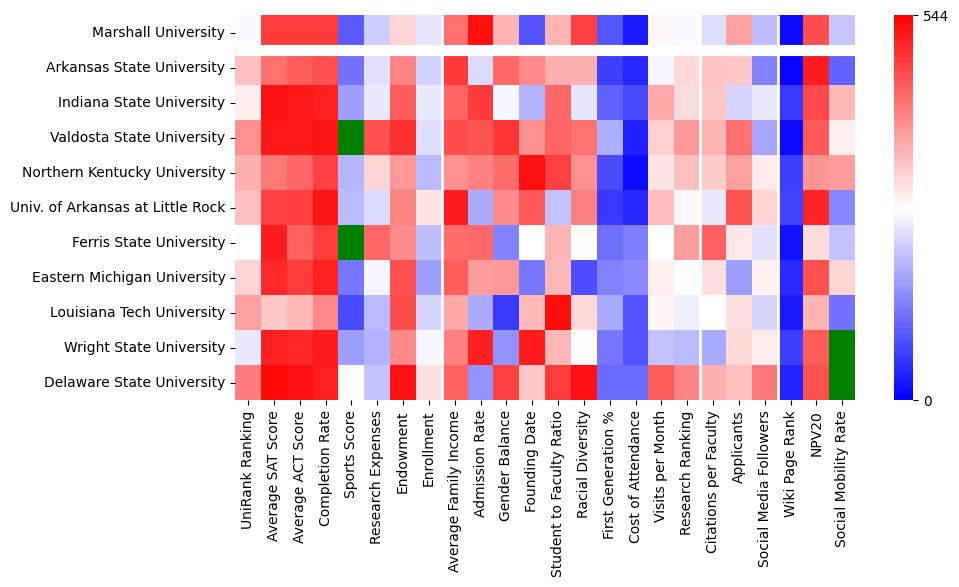
Marshall University, founded in 1837, is a public research university located in Huntington, West Virginia. It began as a subscription school, Marshall Academy, named in honor of John Marshall, the fourth Chief Justice of the United States. Over the years, it has grown into a comprehensive university offering a wide array of undergraduate and graduate programs. With a commitment to inclusivity and opportunity, Marshall University has become a significant educational institution in the Appalachian region, emphasizing both academic excellence and community engagement.
One of the standout features of Marshall University is its dedication to fostering a close-knit community environment while providing the resources of a larger institution. The university prides itself on its personalized approach to education, offering small class sizes and a low student-to-faculty ratio. The Joan C. Edwards School of Medicine is particularly noteworthy, known for its emphasis on rural health and providing medical services to underserved communities. Additionally, the university's commitment to sustainability is evident through initiatives like the sustainability department, which actively promotes environmental stewardship on campus and beyond.
Academically, Marshall University offers robust programs across various disciplines, with particular strengths in fields like business, education, and health sciences. The Lewis College of Business holds AACSB accreditation, a distinction shared by less than 5% of the world's business programs, signaling its commitment to providing high-quality education. In the sciences, the Forensic Science program stands out as one of the top programs in the nation, offering students hands-on learning experiences in state-of-the-art facilities. Furthermore, the university's research initiatives, particularly in biomedical sciences and environmental science, provide students with unique opportunities to engage in cutting-edge research projects.
While Marshall University has many strengths, it faces some challenges as well. As with many public universities, budget constraints have occasionally impacted the availability of resources and facilities upgrades. Some students have noted that the surrounding area, while rich in history and culture, can feel limited in terms of entertainment and leisure activities compared to larger urban centers. However, the university is actively working to enhance student life and community engagement through various campus improvements and partnerships with local organizations. Despite these challenges, Marshall University remains committed to providing a supportive and enriching educational experience.